



If you or someone you love has been using concentrated 7-OH products and is now feeling the effects of stopping, you’re not imagining how bad it feels. 7-OH withdrawal can look and feel like opioid withdrawal, because pharmacologically, that’s essentially what it is. With new regulatory action limiting access to these products, more people are facing this withdrawal right now than at almost any point before — often without knowing what to expect or where to turn.
What Is 7-OH?
7-hydroxymitragynine (7-OH) is a compound naturally found in small amounts in the kratom plant. In its natural form, kratom typically contains less than 2% 7-OH. But according to the Texas Department of State Health Services, concentrated or semi-synthetic 7-OH products — sold as extracts, powders, and gummies — can contain up to 98% 7-OH, and research shows the compound can be up to 13 times more potent than morphine at these concentrations.
That difference matters enormously. Kratom leaf and a concentrated 7-OH extract are not the same product, even though they’re often sold side by side and marketed the same way — as a natural remedy for pain, anxiety, or even opioid withdrawal itself. The irony is real: many people turn to 7-OH products believing they’re a safer alternative to opioids, only to develop a genuine opioid-like dependence.
Why This Is Becoming More Urgent Right Now
In July 2026, the DEA moved to temporarily place concentrated 7-OH above a specified threshold into Schedule I — the same legal category as heroin — while it studies the substance further. States and counties are also acting on their own. In New Hampshire specifically, lawmakers have been considering a bill that would regulate kratom by potency, capping how much 7-OH a product can legally contain.
None of this adds up to a single, simple nationwide ban — the regulatory picture is genuinely a patchwork right now, with federal scheduling action moving alongside separate state and local decisions. What it does mean is that people who have been using these products regularly are increasingly likely to face sudden, unplanned withdrawal as access changes, sometimes with little warning.
Why It’s So Easy to Find — and So Easy to Underestimate
Part of what makes 7-OH different from other opioid-adjacent substances is where it’s sold: gas stations, convenience stores, and smoke shops, often shelved near energy drinks or supplements rather than behind a pharmacy counter. That accessibility, combined with marketing language like “natural” and “plant-based,” makes it easy to underestimate how serious dependence on concentrated 7-OH can become.
Signs and Symptoms of 7-OH Use
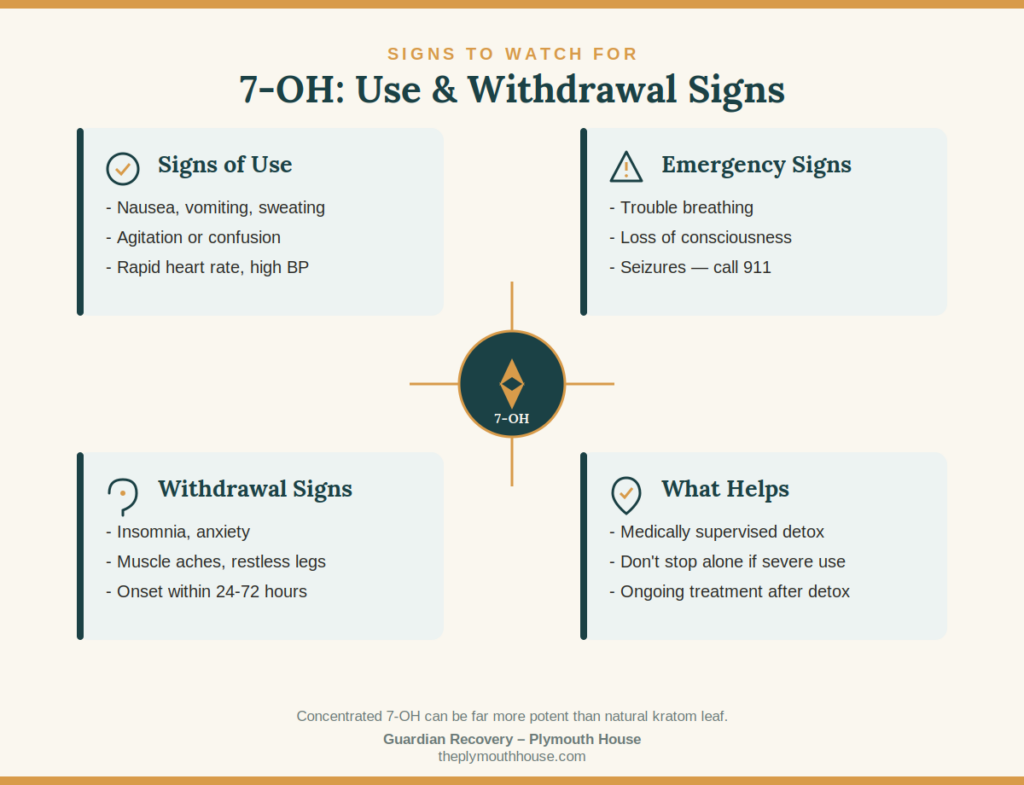
According to the Texas DSHS health alert, reported symptoms following 7-OH use include:
- Nausea and vomiting
- Agitation and confusion
- Sweating and rapid heart rate
- High blood pressure
- Trouble breathing
- Sleepiness or loss of consciousness
- Seizures, in more severe cases
Some of these symptoms, particularly trouble breathing and loss of consciousness, are medical emergencies. If you see these signs, call 911 or the Poison Help Line at 1-800-222-1222 right away.
What 7-OH Withdrawal Feels Like
Withdrawal from concentrated 7-OH tends to follow a pattern similar to opioid withdrawal. A case report published in a peer-reviewed journal described a patient who had escalated to roughly 800 mg of 7-OH daily and required inpatient medically managed withdrawal — not something to attempt alone at home. Commonly reported withdrawal symptoms include insomnia, anxiety, sweating, muscle aches, and restless legs, with onset typically within 24 to 72 hours of the last dose.
The intensity of withdrawal tends to track with how much and how long someone has been using — someone using high daily doses of concentrated 7-OH is likely to have a rougher withdrawal than someone using lower amounts of standard kratom leaf. Either way, withdrawal that involves severe symptoms, or any symptom that feels medically unsafe, deserves professional support rather than trying to push through it solo.
Why Medically Supervised Detox Matters
Because 7-OH acts on opioid receptors, withdrawal can carry real medical risk — dehydration from vomiting, dangerous blood pressure changes, and significant discomfort that makes people go back to using just to feel normal again. A medically supervised detox manages these symptoms safely, with the goal of getting someone stable enough to engage in the actual treatment work that follows.
Treatment Options
Recovery from 7-OH dependence typically involves more than just getting through withdrawal:
- Medical detox — 24/7 supervision to manage withdrawal safely and as comfortably as possible
- Residential treatment — a structured, immersive environment to build a foundation for lasting recovery once withdrawal has stabilized
- Partial Hospitalization Program (PHP) — a step-down level of care with continued clinical support
- Individual and group therapy — addressing what’s underneath the use, whether that’s pain management, anxiety, or another unmet need 7-OH was masking
How Guardian Recovery – Plymouth House Can Help
Guardian Recovery – Plymouth House, located in Plymouth, NH, offers a full continuum of care — medical detox, residential treatment, and PHP — for adults facing kratom and 7-OH dependence, alongside co-occurring mental health and substance use concerns. If you’re outside New Hampshire, our virtual counseling program serves several states, so distance doesn’t have to be the reason you wait to get help.
When to Seek Help
If you or someone you love is dependent on kratom or 7-OH and considering stopping, don’t try to manage withdrawal alone — especially with concentrated products, where the physical risks are real. A conversation with a medical professional or treatment provider can help you understand what withdrawal is likely to look like for your specific situation and what level of care makes sense.
Guardian Recovery – Plymouth House is available to talk through what treatment could look like for you or your loved one. Call (888) 693-1927 to speak with our team.
Frequently Asked Questions
How many days do 7-OH withdrawal symptoms last?
Withdrawal symptoms often begin within 24 to 72 hours of the last dose and tend to be most intense in the first several days, though the exact timeline varies based on how much and how long someone has been using. Some lingering symptoms, like mood changes or sleep disruption, can take longer to fully resolve, which is part of why ongoing treatment after detox matters.
How long does it take for opioid receptors to return to normal?
This varies by individual and by how much and how long someone used, and it’s a question worth discussing directly with a medical provider managing your care. Recovery of normal receptor function generally continues well beyond the acute withdrawal period, which is one reason a structured treatment plan — not just detox alone — gives someone the best chance at a lasting recovery.
Is kratom legal?
It’s complicated and changing. Kratom itself is legal under federal law in most states, though several states and cities restrict or ban it. Concentrated 7-OH products are a different story — they’re currently subject to a temporary federal scheduling action, and some states are separately considering their own restrictions. If you’re unsure about the law in your area, it’s worth checking your state’s current regulations directly, since this is shifting.
Why is 7-OH sold at gas stations?
7-OH and kratom products have largely existed in a regulatory gray area, sold as supplements rather than regulated medications, which is part of why they’ve ended up on convenience store shelves rather than behind a pharmacy counter. That’s beginning to change as federal and state action catches up, but it’s part of why these products can seem more casual or lower-risk than they actually are.